 North South Carolina Plumbing
Quick answer
Shut off the main water valve right away, turn off electricity to wet areas only if you can do so safely, open a faucet to drain the lines, and call a licensed plumber.
Last reviewed: November 23, 2026
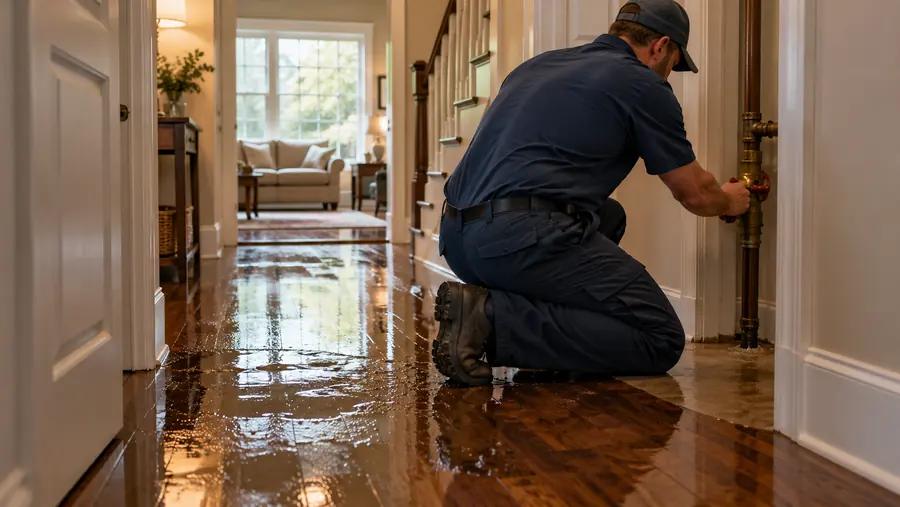
First five minutes
- Find the main shutoff valve, usually where the line enters the house, in a basement, garage, crawl space or near the water meter, and turn it fully closed.
- If water is near outlets, appliances or the electrical panel, stay out and call a licensed electrician or emergency services. Do not stand in water near live power.
- Open the lowest faucet in the house to drain pressure from the pipes, and the highest to let air in.
- Move belongings out of the wet area, and take photos for your insurance claim.
- Call a plumber. For hot water pipes, also turn off the water heater supply.
Why pipes burst in the Carolinas
Freeze events in the Piedmont and foothills, shifting soil after heavy rain, aging galvanized or polybutylene lines, and high water pressure all cause failures. Unheated crawl spaces and exterior walls are common weak points.
After the water is off
Do not turn the water back on until a plumber has repaired the line. Dry the area quickly, because mold can start within a couple of days. Ask your plumber about permits, and get repair terms in writing.
Emergency or urgent: how to decide in one minute
Emergency means water you cannot stop, water near electrical outlets or the panel, a ceiling that is sagging with water, or sewage. Close the main valve and call (980) 352 5155 right away. Urgent means water is controlled but you have lost water to the house or part of it, or a pipe is leaking slowly inside a wall. A drip that stops when the valve is closed can wait for the next visit, but should not wait weeks.
If the pipe froze first
Frozen pipes burst when the ice thaws and the pipe releases pressure. If you find a frozen pipe that has not burst, open the faucet slightly, warm the area with a hair dryer on low or a heater placed safely away from anything that burns, and never use an open flame. If you see a crack or a bulge, close the main valve and call. Pipes in garages, crawl spaces and outside walls are the usual weak points in the Carolinas.
Protect your home and your claim
Take photos and video of the damage before you move things. Move furniture and rugs, run fans if the area is safe and keep receipts for emergency work. Call your insurance company early and ask what they require. Do not tear out wet drywall until you have photos, unless there is a safety reason.
Ask the plumber what caused the failure. A pipe that burst from freezing needs insulation. A pipe that failed at a corroded joint may be the first of several, so ask for an inspection of the other lines.
How to prevent the next one
- Know where the main shutoff is and test it twice a year.
- Insulate pipes in garages, attics and crawl spaces before November.
- Let a faucet drip on the coldest nights.
- Disconnect and drain outdoor hoses before the first freeze.
- Have water pressure checked. Very high pressure strains every joint.
The first ten minutes, in order
- Close the main water valve. In most Carolina homes it is near the street, in the garage, in a utility closet or at the front of the foundation.
- Open the lowest faucet and the outdoor spigot to drain the line and relieve pressure.
- Turn off the water heater power or gas control so the tank does not run dry and overheat.
- If water is near outlets, switch off power to that area at the panel, only if the panel is dry and you can reach it safely.
- Call (980) 352 5155 and tell us the street, the nearest cross street and what you see.
Do these in order and do not stop to mop first. Water that keeps moving does more damage than water that has already spread.
Where pipes burst in Carolina homes
The common failure points are exterior walls, garages, crawl spaces and attics where cold air reaches the pipe. In coastal homes near Myrtle Beach, Wilmington and Charleston, corrosion at fittings is just as common as freezing. Older Charlotte, Greenville and Columbia homes with galvanized or early plastic supply lines can fail at joints without any freeze at all.
Look for damp drywall, a bubble in paint, a musty smell or a water meter that moves when every fixture is off. These are early warnings that a pipe may be leaking before it bursts.
What to tell the plumber on the phone
Tell us the size of the house, whether it is a slab, crawl space or basement, whether you have closed the main, and whether any ceiling is sagging. Mention if the home has polybutylene pipe, which is gray plastic common in homes built between the late 1970s and the mid 1990s. It affects the repair method and the questions you should ask about the rest of the system.
Ask what the plumber will check after the repair: pressure, other joints on the same run and the shutoff valves. A good repair closes the problem and tells you if a second one is coming.
What people near you ask for
Need a plumber near me?
Call (980) 352 5155 any hour. We connect you with a licensed local plumber who quotes by phone before work starts. Related service: Burst Pipe Repair near me. Website: northsouthcarolinaplumbing.com.
Frequently Asked Questions
Should I turn off the water heater too?
Yes, if the break is on the hot side or you have turned the main water off for a long time. Ask the plumber before restarting it.
Who pays for burst pipe damage?
That depends on your insurance policy. Contact your insurer and keep photos and receipts.
Can someone come at night?
Phone lines are open 24/7 and the plumber confirms their arrival time individually by phone.
Sources and further reading
More plumbing guides
- How to Find a Licensed Plumber in Charlotte, NC
- How Much Does Drain Cleaning Cost in North Carolina?
- Signs Your Water Heater Needs Repair or Replacement
- How to Identify a Sewer Line Problem in Your Home
- North Carolina vs. South Carolina Plumbing License Verification
- What Causes Low Water Pressure in a House?
- How to Choose a Plumber in Myrtle Beach