 North South Carolina Plumbing
Quick answer
Water around the base, rusty hot water, rumbling noises and age past about 10 years point toward replacement. Lukewarm water, a tripped breaker or a pilot that will not stay lit often point to a repair.
Last reviewed: November 23, 2026
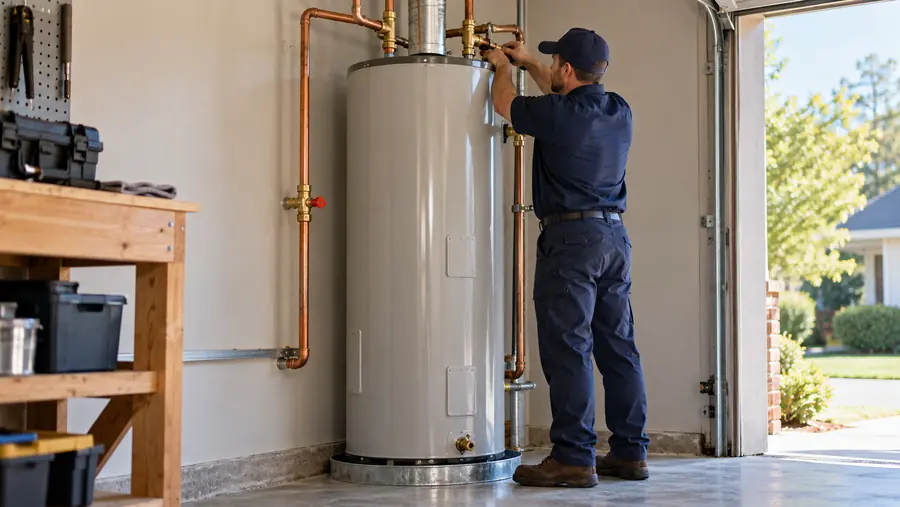
Signs that usually mean repair
A failed heating element or thermostat on an electric unit, a faulty thermocouple on a gas unit, a leaking pressure relief valve, or a unit under about six years old with one failed part.
Signs that usually mean replacement
A leaking tank, rust colored hot water, a unit older than about 10 years, repeated repairs, and loud popping from sediment.
Safety first
If you smell gas, leave the home and call 911 or your gas utility from outside. If the tank is leaking, shut off the water supply to it and the power or gas. The U.S. Department of Energy has general guidance on water heating options. Your plumber handles applicable permits and venting requirements for gas units.
Emergency or urgent: what to do first
Water around the tank, a hot smell, steam from the relief valve or a gas odor is an emergency. Turn off the water supply to the heater and the power or gas control, and call (980) 352 5155. If you smell gas, leave the building first and call 911 or your gas utility from outside. No hot water is urgent in winter and for homes with children or older adults, so ask for the earliest visit.
Repair or replace: a simple way to decide
- Under about six years old with one failed part: repair is usually reasonable.
- About ten years old or more with repeated repairs: replacement usually makes more sense.
- Leak from the tank itself: replace. A tank cannot be repaired once it has rusted through.
- Rusty hot water only: may be the tank or the pipes. Have it checked.
What to ask about a replacement near me
Ask which size and type fit your household, whether the venting meets current code, whether an expansion tank or pressure relief valve is needed, and whether the plumber handles the permit. Ask about the warranty on the tank and on the labor, and ask for it in writing. Ask whether the old unit is removed and disposed of.
Carolina specific factors
Hard water in some Piedmont and coastal areas builds sediment that shortens tank life and makes burners noisy. Flushing the tank once a year helps. In garages, heaters can be exposed to cold, and in crawl spaces to moisture. Coastal salt air speeds up corrosion on fittings and flues near the Grand Strand.
Warning signs by type
- Tank heater: rumbling or popping from sediment, rusty water, moisture at the base, a pilot that will not stay lit.
- Tankless heater: error codes, cold water sandwiches, reduced flow, mineral scale in the heat exchanger.
- Heat pump heater: longer recovery times, filter alerts, a drop in output in a cold garage.
Note when the symptom started and how the heater is used. A change after a house guest, a new dishwasher or a cold snap often points to the cause.
How long water heaters last in the Carolinas
Many tank heaters give eight to twelve years of service, and less where the water is hard or the unit sits in a damp crawl space or a salty coastal garage. Anode rods wear out and, when they are gone, the tank begins to corrode. Flushing once a year and replacing the anode rod when it is spent can add years. Tankless units can last well beyond a decade with yearly descaling.
The label on the side shows the manufacture date in the serial number. If you cannot read it, send the plumber a photo before the visit.
Safety checks that matter
Check the temperature and pressure relief valve and its discharge pipe. Look for scorch marks near a gas heater, a yellow burner flame or a draft hood that is loose. Carbon monoxide alarms should be present on every floor with a gas appliance. If an alarm sounds, go outside and call emergency services. A plumber should inspect venting, gas connections and the relief valve at every visit, not only the part that failed.
Checklist before you call about a water heater
- Fuel type: gas, electric, heat pump or tankless.
- Tank size in gallons and the age on the label.
- Where the unit sits: garage, closet, attic, crawl space or utility room.
- Any leaks, rust, noise, odor or error codes, with the date they began.
- How many people use hot water and at what hours.
With this information the plumber can bring the right parts and tell you early whether repair or replacement is likely. In Charlotte, Raleigh and Greenville, many heaters sit in garages where cold nights slow recovery, so mention the location. In coastal homes near Myrtle Beach and Charleston, mention salt exposure, because it affects venting and fittings.
If hot water stops during a cold week, ask for the earliest visit. Phone lines at (980) 352 5155 are open 24/7 for fast response. While you wait, avoid draining the tank unless a plumber tells you to, and keep the area around the heater clear.
Repair or replace: more detail
Common plumbing requests near you
Need a plumber near me?
Call (980) 352 5155 any hour. We connect you with a licensed local plumber who quotes by phone before work starts. Related service: Water Heater Repair and Replacement near me. Website: northsouthcarolinaplumbing.com.
Frequently Asked Questions
How long does a tank water heater last?
Roughly 8 to 12 years, and hard or mineral heavy water can shorten that.
Is a tankless unit worth it?
They save space and can last longer but may need gas line or venting upgrades. Ask the plumber for a written scope.
Who do I call at night?
Call (980) 352 5155. Phone lines are open 24/7, and the plumber confirms arrival by phone.
Sources and further reading
- U.S. Department of Energy, water heating
- NC State Board of Examiners of Plumbing, Heating and Fire Sprinkler
More plumbing guides
- How to Find a Licensed Plumber in Charlotte, NC
- What to Do When a Water Pipe Bursts at Home
- How Much Does Drain Cleaning Cost in North Carolina?
- How to Identify a Sewer Line Problem in Your Home
- North Carolina vs. South Carolina Plumbing License Verification
- What Causes Low Water Pressure in a House?
- How to Choose a Plumber in Myrtle Beach