 North South Carolina Plumbing
Quick answer
Several drains backing up at once, gurgling toilets, sewage odors and soggy or sunken spots in the yard usually point to the main sewer line rather than a single fixture.
Last reviewed: November 23, 2026
Warning signs
- More than one drain is slow or backing up, especially the lowest in the house.
- Gurgling sounds when a toilet flushes or the washing machine drains.
- Sewage smell in the yard or basement.
- Unusually green, wet or sunken patches over the sewer path.
- Cracks or settling near the foundation.
What to do next
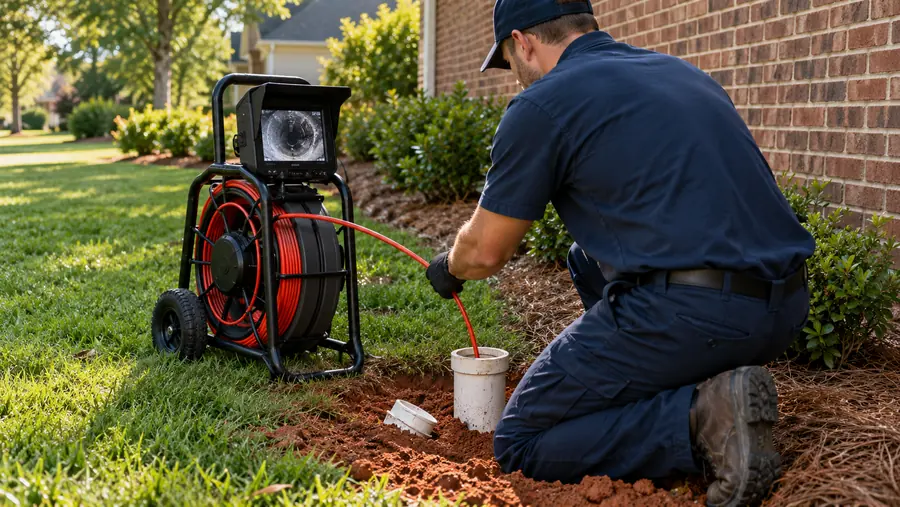
Stop using water, locate your cleanout, and call a plumber. A camera inspection shows the condition of the line, and the plumber can discuss cleaning, spot repair, trenchless methods or replacement. Call 811 before any digging. NC811 and SC811 serve the two states.
Septic homes
If you have a septic system instead of a sewer connection, see the EPA septic guidance and have the tank inspected and pumped on a regular schedule.
Emergency or urgent sewer problems near me
Sewage coming up in a tub, shower or floor drain is an emergency. Stop using water, keep people and pets away, and call (980) 352 5155. Gurgling, slow drains in more than one fixture and a sewer smell in the yard are urgent, because they usually mean the line is partly blocked and may fail soon. Do not use chemical drain cleaners in a suspected main line problem, because they can injure the plumber and do not clear roots.
Quick tests you can do
Run water in the sink farthest from the main line and flush the toilet. If water backs up in a tub or floor drain at the lowest point of the house, the main line is likely blocked. If only one fixture is slow, the blockage is probably in that branch. Look for the cleanout, usually a capped pipe near the foundation, and note whether water or sewage is visible inside it. Do not open it if sewage is under pressure.
What the plumber should do
A camera inspection shows the cause: roots, grease, a bellied section, a break or a collapsed pipe. Ask to see the video or photos. Then ask the plumber to explain the options in plain words: cleaning, spot repair, lining, pipe bursting or full replacement. Ask which option fits the problem and what each one involves.
When sewer lines fail more often
After heavy rain, older clay lines let in groundwater and roots grow faster in spring and summer. Homes with large trees, older neighborhoods and homes built before the 1980s are more at risk. If you are buying an older house, a sewer camera inspection before closing can avoid a surprise.
Outside clues around the property
Look at the yard along the path between the house and the street. A strip of lush grass, a sunken area or a persistent wet patch can mean a leak in the line. Check around the cleanout cap for staining and smell. Notice if nearby neighbors also have slow drains, because a shared or municipal main may be involved. In that case, the city or utility, such as Charlotte Water, handles the public side, and the plumber handles the private line from the house to the connection.
Inside clues and what they mean
- Bubbling in a toilet when the washer drains points to an air or flow problem in the main.
- Water rising in a tub when the toilet is flushed points to a main line blockage.
- A sewer smell in the basement or near a floor drain may mean a dry trap or a cracked line.
- Fruit flies or drain flies that keep returning can mean a hidden leak.
Keep notes with dates. A pattern is useful information for the plumber.
Repair options in plain words
Cleaning clears the blockage but does not fix a damaged pipe. Spot repair replaces a short broken section. Pipe lining creates a new pipe inside the old one without a long trench, and pipe bursting pulls a new line through the old path. Full replacement is open trench work and sometimes the only choice for a collapsed line. Ask which option applies, what restoration is involved for your yard, driveway or landscaping, and what permit and inspection steps follow. Our guide on trenchless and traditional sewer repair explains the tradeoffs.
Checklist before you call about a sewer line
- Which fixtures are affected and which still work.
- When the problem began and whether heavy rain came first.
- Whether you have a cleanout and where it is.
- The age of the home and any past sewer work.
- Large trees within about twenty feet of the line.
This shortens the first visit. Plumbers working in Charlotte, Raleigh, Durham, Columbia and Greenville often see the same pattern: older homes with clay lines and mature trees. Newer subdivisions see problems from settling soil and from construction debris left in the line.
If sewage is rising now, stop all water use and call (980) 352 5155. Do not run the washing machine or flush. Take a photo of the area for your insurance record, and keep children and pets away from wet floors.
Common plumbing requests near you
Need a plumber near me?
Call (980) 352 5155 any hour. We connect you with a licensed local plumber who quotes by phone before work starts. Related service: Sewer Camera Inspection near me. Website: northsouthcarolinaplumbing.com.
Frequently Asked Questions
Is a camera inspection needed?
It is the best way to see the cause, and it helps compare repair options.
What is trenchless repair?
A method that repairs or replaces a line with little digging. Suitability depends on the pipe condition.
Sources and further reading
More plumbing guides
- How to Find a Licensed Plumber in Charlotte, NC
- What to Do When a Water Pipe Bursts at Home
- How Much Does Drain Cleaning Cost in North Carolina?
- Signs Your Water Heater Needs Repair or Replacement
- North Carolina vs. South Carolina Plumbing License Verification
- What Causes Low Water Pressure in a House?
- How to Choose a Plumber in Myrtle Beach