 North South Carolina Plumbing
Quick answer
Common causes are a partly closed shutoff valve, clogged aerators or showerheads, a failing pressure regulator, a hidden leak, or corroded galvanized pipes. Check whether it affects one fixture or the whole house.
Last reviewed: November 23, 2026
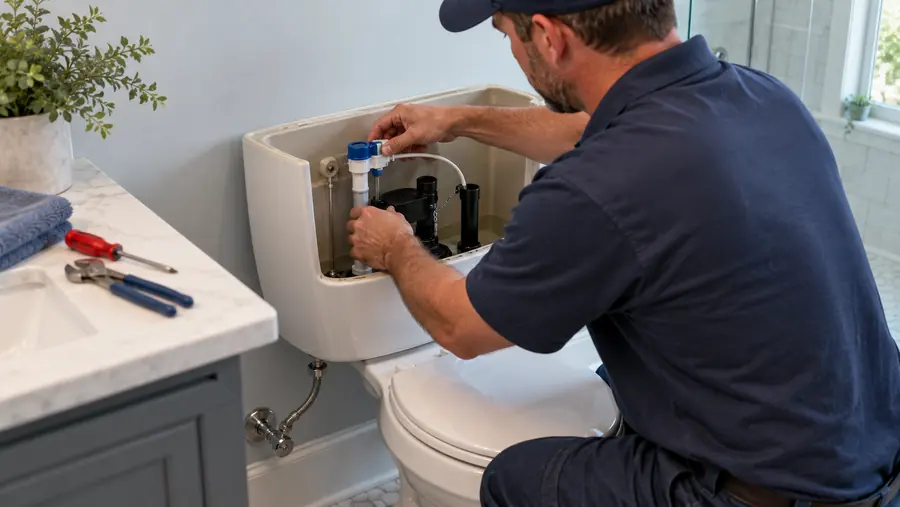
Start with the simple checks
- One fixture only: clean the aerator or showerhead.
- Hot water only: check the water heater shutoff and sediment.
- Whole house: confirm the main valve is fully open and ask neighbors if the street is affected.
Bigger causes
A failing pressure reducing valve, a leak in the line, or corrosion inside older galvanized pipes. If the water meter moves when everything is off, you may have a leak. The EPA WaterSense program explains how to check for leaks.
When to call
If the whole house is affected after basic checks, call a plumber to test pressure with a gauge and inspect the regulator and lines.
Emergency or urgent: when low pressure is serious
Sudden low pressure with no water at all, water coming up in the yard, a wet spot that is growing near the meter or a burst sound in the wall is an emergency. Close the main valve and call (980) 352 5155. A slow drop over weeks, weak pressure in only one bathroom or a shower that sputters is not an emergency, but it should be checked soon because corrosion and leaks get worse.
Check the pressure yourself
A pressure gauge screws onto an outdoor hose bib and costs little at a hardware store. Many homes run between about 40 and 80 psi. Test in the morning and in the evening. If pressure drops a lot at busy hours, the problem may be on the street side, so call your water utility. If it is low all day, the problem is in the house.
Common causes and who handles them
- Clogged aerators and showerheads: you can clean them with vinegar.
- Partly closed main valve or meter valve: check both.
- Failing pressure reducing valve: a plumber replaces it.
- Hidden leak: a plumber can find it with a meter test and listening equipment.
- Galvanized pipe corrosion: older homes may need repiping.
Local conditions
Hard water and iron in some areas build scale in pipes and fixtures. Older neighborhoods in Charlotte, Raleigh, Greenville and Charleston may still have galvanized supply lines. Homes on hills can see lower pressure on upper floors, and a booster pump or a regulator change may help. Tell the plumber which fixtures are affected and since when.
Step by step: find where the pressure is lost
- Test pressure at an outdoor spigot with a gauge, morning and evening.
- Compare hot and cold. If only hot is weak, look at the water heater and its valves.
- Check if all fixtures are weak or just one. One weak fixture points to a clogged aerator or cartridge.
- Look at the main valve and the meter valve, both should be fully open.
- Check the pressure reducing valve near the main. Pressure that is suddenly lower than before may mean it is failing.
When the cause is in the pipes
Older galvanized pipe narrows from the inside as scale builds, and the flow falls year after year. A plumber can measure the flow at a few points to show where the restriction sits. Repair may be a section, or in older homes a repipe with PEX or copper. Ask for a written explanation of the section that will be replaced and how walls and ceilings will be patched.
Homes with well systems should also check the pressure tank, pump and filters, which fail in different ways than city supply.
Pressure that is too high
High pressure is a problem too. Pressure above about 80 psi strains fittings, washing machine hoses and the water heater, and it can shorten the life of every fixture. A pressure reducing valve and an expansion tank set it back to a safe range. If you hear banging pipes when a valve closes, high pressure or missing air chambers may be the cause.
Checklist before you call about low pressure
- Which fixtures are weak: all, hot only, cold only or one.
- When it began and whether it followed work on the street or in the house.
- The reading from a gauge at an outdoor spigot, if you have one.
- Whether the house is on city water or a well.
- The age of the plumbing and whether it is galvanized, copper or plastic.
With these answers the plumber can often tell you the likely cause on the phone. Neighbors with the same problem point to the street supply. A problem in one house points to a valve, a hidden leak or aging pipe.
Phone lines at (980) 352 5155 are open 24/7. If you see water in the yard, a spinning meter or damp floors, close the main valve and call right away, because low pressure plus a wet spot is a leak until proven otherwise.
Common plumbing requests near you
Need a plumber near me?
Call (980) 352 5155 any hour. We connect you with a licensed local plumber who quotes by phone before work starts. Related service: Low Water Pressure Repair near me. Website: northsouthcarolinaplumbing.com.
Frequently Asked Questions
What is normal pressure?
Many homes run between about 40 and 80 psi. A plumber can measure it.
Can old pipes cause low pressure?
Yes. Galvanized pipes narrow with corrosion over time.
Is high pressure a problem too?
Yes, it can damage fixtures and cause leaks.
Sources and further reading
More plumbing guides
- How to Find a Licensed Plumber in Charlotte, NC
- What to Do When a Water Pipe Bursts at Home
- How Much Does Drain Cleaning Cost in North Carolina?
- Signs Your Water Heater Needs Repair or Replacement
- How to Identify a Sewer Line Problem in Your Home
- North Carolina vs. South Carolina Plumbing License Verification
- How to Choose a Plumber in Myrtle Beach